

I am still alive. Look out and you will see the apple trees dressed in moonlight, that never show their breath yet breathe. They would not flaunt their leaves by day. If this is true, let it be. Not so, not so. Not a voice I recognize, yet mine. Falsetto, falsetto. I hum so that I know I am alive.
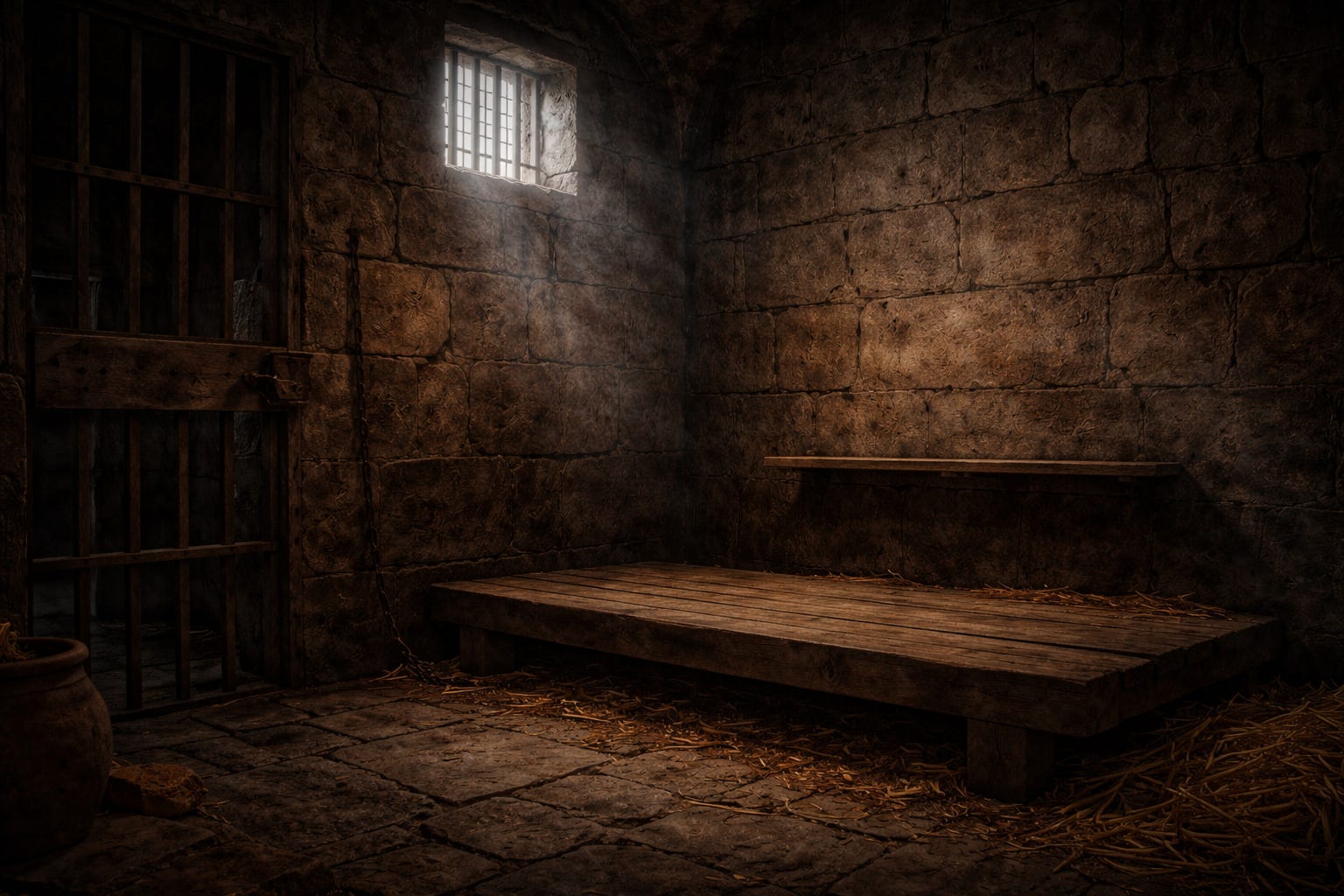
What purpose is this, to watch from here and not know how it ends? My ledge is one of limestone, roughly hewn, my bed a block of wood. These thirty nights I have not found sleep. The voices come unannounced and read me again their gentle verdicts. A room I can barely walk two steps in. A barred window chokes the light. I cannot smell the spring air, but it is raining. There is another room I sit in. I wake each morning to division. A double-window, glass the likes of which I have never seen so clearly through. I watch the dry fountain for it to flow, a stone angel at its base, one wing missing, broken off.
The heart is an insistent thing, short and steady in its work, immune to the terse convictions of those who have never heard it sleep. I am not mad. I have told them I am not mad, but possessed by a sudden streak of luminescence. I must tell you of the lights before it is too late, for tomorrow they will walk me through Rouen. I am in two worlds at once, pulled between. One with a fountain and an angel with a broken wing, a house dire in its emptiness and maze of halls. In the other I am shackled at my feet to a block of wood, a bed in which I cannot sleep for those who watch me with eyes that do not close.
The one whose double-window lets me out among the apple trees, is this Normandy? Meadows shrouded in moonlight, yet peaceful and plain by dawn. There is an infant crying somewhere beneath, dull cries that do not cease. Falsetto, falsetto. I must go to bring it ease. The child’s name is Oliver and he is mine. I hum so I know that I am still alive.
I might leave this room through the double-window, as I attempted at Beaurevoir, to make a final resting place of straw and dirt. Or to try the door again, three keys turned at once and step out into the hall, rush down the spiral stairs, go to Oliver and raise him from his seat and soothe him until his cries fade into me. Somewhere there is a room with a bath, a place where water falls as if from a well above. I will leave it running so all the rivers never stop when I am gone, the Loire and the Loing and my dear Moselle, the one which feeds the marshes of Lorraine. I am myself and no other. Oliver will not stop crying. He is mine. I hum so that I know I am alive, but I cannot reach him quite in time.
In this house of solitude, never any sound like voice or the call of birds, rock pigeons, sparrows, and carrion crows. Never any sound in the preparations for life, but on a hill overlooking the orchard and in a courtyard where an angel spends its portion of eternity looking down, not up at me. It has one broken wing. There are no protections, none left to see. He will not stop crying in his high chair. I could not tell you his complaint. I would go to him if I could, but the door is locked and there are chains around my feet.
Is it November yet? Or May? I must tell you of the lights I’ve seen that cross the sky at night to me and call me by my given name, a syllable, an exhalation, a brief cry of fire, my heart a cloud of butterflies released into the rolling meadow just beyond the apple trees. Is this Normandy? I have followed the voices where they lead and not questioned what they asked me to forget. I have seen them with my eyes, the multitudes in their final throes, but I have not yet seen myself. Who am I if I am not alive? What room will my breath no longer forget? Give me to the windows I am looking through. I must tell you of the lights before I descend the limestone steps. I have told you. He is crying. Falsetto, falsetto. It is done. I have left.
You can listen to this story on Apple Podcasts, Spotify, and here on Substack